
A new EY India report highlights how young professionals, women wealth creators, entrepreneurs, ESOP beneficiaries, and digitally active consumers from Tier-2 and Tier-3 cities are fundamentally changing India's wealth ecosystem. This shift is evidenced by increased participation of young and women investors, a rise in disciplined investing via SIPs, and the crucial role of Digital Public Infrastructure in democratizing access to long-term wealth creation. The report predicts over 100 million new investors by 2035.

Adani Enterprises and US-based Jabil have signed a non-binding agreement to establish a 50:50 joint venture in India. This JV will manufacture artificial intelligence and data centre equipment, including AI racks, servers, storage, networking gear, and cooling systems, targeting both Indian and global markets. The collaboration aims to capitalise on India's accelerating data centre demand and the surging global investment in AI compute infrastructure.

Cathy Li, Head of the Centre for AI Excellence at the World Economic Forum, advocates for integrating AI literacy into India's education curriculum and incentivising AI companies to prioritise child safety. She stresses the need for localised solutions that account for India's linguistic and cultural diversity, as well as varying levels of connectivity and digital literacy, to ensure AI systems are safe and beneficial for children.

India's capital markets regulator, Sebi, has simplified the onboarding process for foreign portfolio investors (FPIs) by permitting them to submit a digitally signed Power of Attorney (PoA) to their custodians, eliminating the need for notarisation or apostillisation.

Mercedes-Benz India's Managing Director & CEO Santosh Iyer stated that demand continues to outstrip supply, particularly for the CLA electric vehicle, with over 1,000 orders and deliveries extending to March-April 2027. The company could have sold an additional 1,000 vehicles if supply had been adequate.

Apple has officially launched its Apple Pay service in India, initially partnering with Axis Bank for Visa and Mastercard credit card users. The service allows secure, cashless transactions via iPhone, iPad, and Apple Watch using NFC technology, without requiring PINs or OTPs. This move is set to intensify competition in India's digital payments market, currently dominated by UPI and local players, with Apple planning to onboard more banks and expand merchant networks.

India's Para Asian Games contingent received a formal send-off in New Delhi, with Sports Minister Mansukh Mandaviya launching the new Team India jersey. Prominent para-athletes, including flag bearer Pramod Bhagat, attended the ceremony. Mandaviya encouraged the athletes to win medals, assuring them of government support. Head coach Satyanarayana expressed confidence in medal prospects despite a reduced quota, while athletes like Suvarna Raj and Pramod Bhagat voiced their determination to secure medals.

India has secured a spot among the top 10 leading emerging-market performers in artificial intelligence (AI) readiness, with private investment in AI more than tripling to USD 4.1 billion in 2025, according to a new World Bank report.

Google Cloud India's Managing Director, Sashikumar Sreedharan, has resigned to pursue a new opportunity. Amit Kumar, previously MD for Digital Natives, has been appointed as the interim head of India operations. The transition was announced by Karan Bajwa, President of Google Cloud Asia Pacific, who highlighted the company's strong momentum in India.

A two-day weekend would help employees recover physically and mentally. They would return better prepared for branch work that demands patience, judgment, and accuracy, asserts Tamal Bandyopadhyay.

India is developing a 'Gross Domestic Knowledge Product' (GDKP) to identify and define its knowledge assets, a move aimed at safeguarding them amidst global efforts to monetise and 'weaponise' knowledge, according to NITI Aayog member R Balasubramaniam.

Jio Platforms Limited (JPL) believes satellite broadband services are unlikely to achieve significant scale or compete effectively on price in India's highly connected and affordable market, despite developing its own satellite constellation solutions and flagging it as a potential disruptor.
Jio Platforms Ltd's initial public offering (IPO), anticipated to be India's largest, is scheduled to open for subscription on October 21 and close on October 23, with reservations for employees and Reliance Industries Ltd shareholders.

An IIT Madras study reveals that financial cybercrime victims in India are often highly educated professionals, challenging the notion that only careless or financially unaware individuals are targeted. The research highlights that digital literacy doesn't guarantee protection, as fraudsters exploit stress and emotional vulnerabilities.
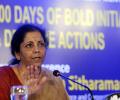
The Rajya Sabha has passed The Bankers' Books Evidence Bill, 2026, which aims to replace a British-era law and allow digital and virtual records to be admissible as evidence in courts. This legislation aligns with contemporary digital banking practices and extends a uniform evidential framework to various financial entities, including NBFCs and fintech companies. Finance Minister Nirmala Sitharaman highlighted the bill's role in strengthening public confidence and safeguarding customer privacy. The bill's passage, however, saw an Opposition walkout over unrelated issues.

A new report by TeamLease Digital highlights a significant AI-ready talent gap in India's technology industry, with shortages of 53-60 per cent in Generative AI and cloud skills. The report indicates that only 16 per cent of IT professionals possess AI skills, leading to rising salary premiums for AI-core roles and a projected demand for over 10 lakh GenAI roles by 2026.

The NCP (SP) has demanded a complete rollback of the 0.4 per cent Merchant Discount Rate (MDR) on UPI transactions above Rs 2,000, effective October 15. The party termed the move a "direct assault" on small traders and shopkeepers, accusing the Modi government of "double standards" by burdening small merchants while large industrialists benefit from loan write-offs.

Reserve Bank Deputy Governor S C Murmu has highlighted the "cash paradox" where currency in circulation continues to grow despite a significant increase in digital payments. This trend complicates the RBI's forecasting and planning for currency production and distribution, prompting the central bank to seek solutions and explore ways to extend banknote life and reduce the carbon footprint of the cash cycle.
IBM India and South Asia MD Sandip Patel states that technology, especially AI, should not be "artificially paused." He advocates for vigilance and proactive governance to foster innovation while addressing potential risks. Patel also highlights IBM's India-specific initiatives like Bharat Core and a sovereign AI stack, and discusses the impact of AI on jobs and global supply chains.

Microsoft has inaugurated its India South Central data centre region in Telangana, marking its fourth cloud region in the country and significantly expanding its cloud and AI infrastructure. This strategic investment supports Telangana's ambitious goal of achieving 5 GW of data centre capacity by 2029 and attracting USD 30 billion in digital infrastructure investments, further solidifying Hyderabad's role as a global technology hub.
Microsoft has inaugurated its India South Central data centre region in Telangana, marking its fourth cloud region in the country and significantly expanding its cloud and AI infrastructure. This strategic investment supports Telangana's ambitious goal of achieving 5 GW of data centre capacity by 2029 and attracting USD 30 billion in digital infrastructure investments, further solidifying Hyderabad's role as a global technology hub.

Air India is developing a new in-house 'Vista Digital Platform' for its in-flight entertainment system, set to launch progressively from late 2027. This platform aims to integrate entertainment, loyalty, commerce, and travel services, enhancing passenger experience and boosting ancillary revenues through features like 'commerce-on-map' and personalisation.

India-Pakistan clashes in cricket and hockey drew big audiences at the Aichi-Nagoya Asian Games, helping fuel stronger viewership and a 20% revenue rise.
Industry leaders at MRAM Expo 2026 highlighted that India's maintenance economy has the potential to unlock a 1 per cent GDP opportunity. This growth can be achieved by addressing productivity losses from equipment breakdowns, unplanned downtime, and inefficient assets through smarter asset management practices. The NITI Aayog also supports AI-based predictive maintenance for resilient infrastructure, while the Indian Asset Performance Management market is projected for substantial growth by 2033.
Microsoft has officially launched its fourth cloud region in India, located in Hyderabad, as part of its USD 20.5 billion investment in the country's digital and AI infrastructure. This new facility, which became available on August 6, features zero-water cooling technology and aims to enhance capacity and resilience for organisations in India and Asia, supporting the nation's rapid digital growth and projected increase in data centre capacity.

Prime Minister Narendra Modi emphasised the democratisation of technology to ensure no section of society is left behind, advocating for affordable and accessible digital services, especially for the Global South. He highlighted the potential of Digital Public Infrastructure (DPI) and called for solutions to cyber fraud, global standards for emerging tech, and mechanisms to identify AI-generated content during his interaction with GSMA board members.
GE Aerospace is set to significantly increase its supply chain spending in India, targeting USD 400 million by 2030, up from USD 200 million in 2025. This expansion reflects the company's commitment to India's burgeoning aviation market, driven by substantial aircraft orders and the strategic importance of its manufacturing and technology centres in Pune and Bengaluru.

Artificial intelligence major Anthropic has launched AI inference capabilities in India through Amazon Bedrock, allowing its Claude AI models to process data within the country's jurisdiction. This strategic move addresses the growing demand from Indian entities, particularly in regulated sectors, for compliance with local data processing norms as per the Digital Personal Data Protection Act. The initiative strengthens Anthropic's commitment to the Indian market, enabling secure and compliant AI deployment for sensitive workloads and fostering trust among major enterprises like Reliance, CRED, and NPCI.

A graphic designer, Pankaj Gupta, was arrested by Mumbai Crime Branch for creating malicious Android Package Kit (APK) files that enabled cyber fraudsters to cheat over 9,600 people of Rs 150 crore. Gupta, who previously escaped a digital arrest scam, developed APKs disguised as government services, selling them to cybercriminal networks in Bihar and Jharkhand.

Fuel pump dealers in Madhya Pradesh plan to stop accepting UPI payments exceeding Rs 2,000 for petrol and diesel from October 16, citing concerns over the proposed Merchant Discount Rate (MDR). The Confederation of All India Traders (CAIT) has urged the government to reconsider the MDR imposition, warning it could hinder digital payment adoption and impact traders' profits.

India's services sector experienced its strongest growth in three months in September, with the HSBC India Services PMI Business Activity Index rising to 55.2, driven by a sharp increase in new orders and strengthening domestic demand.
A report by IIT Bombay suggests that the proposed Merchant Discount Rate (MDR) framework for Unified Payments Interface (UPI) transactions needs rationalisation before implementation to safeguard public trust in the digital payments system, highlighting that UPI's long-term economic benefits outweigh potential incremental income from merchant fees.

'We are ready to help Prime Minister Modi achieve his vision of 100 per cent connectivity throughout India -- a vision all of our company, including Elon, shares,' Lauren Dreyer, vice-president of Starlink business operations at SpaceX, said at the pre-business day of the India Mobile Congress in New Delhi.

Tata Sons Chairman N Chandrasekaran views the group's investment in semiconductors not as a short-term financial play, but as a critical long-term commitment to India's growth and self-reliance in a sector vital for domestic consumption and global supply chains.

Former Haryana Chief Minister Bhupinder Singh Hooda has criticised the newly introduced fees on UPI payments, stating they will lead to increased inflation for the common man. He dismissed government claims that customers would not be burdened, arguing that merchants would pass on the costs. Hooda demanded the immediate withdrawal of these fees, highlighting that the government's move contradicts its 'Digital India' initiative.

Dedicated Ayush dispensaries increased from 26,130 in 2013-2014 to 37,804 in 2024-2025, while hospitals rose much more slowly, from 3,605 to 3,885.

Nandan Nilekani, co-founder of Infosys, has urged for the expanded adoption of the Account Aggregator (AA) framework to facilitate formal credit access for self-employed individuals and gig workers. He highlighted its potential to enable cash-flow-based lending by leveraging diverse data streams, moving beyond traditional asset-based lending, and fostering a more inclusive digital financial infrastructure in India.

Isha Ambani, a director on the board of Jio Platforms, revealed that a failed attempt to upload a college assignment in 2009-10 due to poor internet connectivity in Mumbai sparked the idea and subsequent conversations that led to the creation of Jio.
Atomic Energy Commission chairman Ajit Kumar Mohanty stated that India is on the verge of a significant technological transformation, driven by advancements in AI, quantum technologies, and other fields. Speaking at BIT Mesra's convocation, he emphasised the need for strong indigenous capabilities, skilled professionals, and interdisciplinary collaboration to achieve a developed India. Other speakers, including BIT Mesra's Chancellor and Vice Chancellor, echoed the importance of continuous learning and contributing to national progress.

Union Health Secretary Punya Salila Srivastava highlighted the strong health cooperation within BRICS, emphasising the critical role of digital health and artificial intelligence in ensuring continuity of care. Speaking at the 16th BRICS Health Ministers' meeting, she noted shared challenges among member nations and showcased India's advancements in digital health infrastructure and AI strategy.
